Products for the main ALERT2 roles
Blue Water Design manufactures remote transmitters, base stations, repeaters, and portable field tools: the core equipment needed for a reliable ALERT2 network.

ALERT2 expertise
Blue Water Design builds ALERT2 devices, VantagePoint software, and technical resources for agencies operating real-world environmental monitoring networks.
Why it matters
Blue Water Design builds for the ALERT2 systems agencies operate today while continuing to modernize configuration, diagnostics, software integration, and two-way capabilities.
Protocol requirements matter, but so do best practices: sensible defaults, maintainable configuration, useful status reporting, clean handoff to software, and support for field technicians who have to keep networks running over many years. A forward-looking, system-level approach differentiates our suite of ALERT2 products.
Blue Water Design manufactures remote transmitters, base stations, repeaters, and portable field tools: the core equipment needed for a reliable ALERT2 network.
Blue Water Design knows ALERT2. From developing the first ALERT2 encoders and decoders to promoting modern standards for internet connectivity, that protocol knowledge shows up in product design and agency support.
Blue Water Design continues to develop and release new hardware, firmware, and software so agencies can take advantage of modern interfaces, clearer diagnostics, and the latest ALERT2 features.
Sensors only provide good data when they are regularly maintained. Blue Water Design systems are built with maintenance in mind, making issues easier to identify, troubleshoot, and fix for a more reliable network.
What is ALERT2?
ALERT2 is an open protocol for moving real-time environmental measurements from remote sites to operational systems. It is commonly used for flood warning, rainfall, stream stage, weather, and related monitoring networks where field sites may be distant, low-power, and exposed to severe conditions.
Instead of requiring every site to have continuous internet connectivity, ALERT2 uses compact radio messages. A remote station can transmit a report directly to a base station or through repeaters that extend coverage across terrain. The base station then hands the decoded data to software, dashboards, alarms, public views, or downstream agency systems.
Because ALERT2 is specified openly, agencies are not locked into a single closed data format. Hardware and software from different organizations can interoperate when they follow the specifications, and the user community has a shared technical foundation for long-lived systems.
Collect rainfall, stage, weather, status, or equipment measurements.
Move compact messages across scheduled radio slots toward a base station.
Recover messages and pass decoded telemetry into operational software.
Turn received telemetry into maps, charts, notifications, and public information.
Key advantages
ALERT2 keeps the practical strengths of radio telemetry while adding capacity planning, data integrity, network services, and richer sensor reporting than older fixed-width telemetry formats.
VHF and UHF radio links can cover difficult terrain and remote locations where cellular service may be unavailable, overloaded, or unreliable during the exact events when measurements matter.
ALERT2 provides a highly efficient format for environmental telemetry, supporting real-time data delivery over a shared radio channel.
Time division multiple access assigns transmitters scheduled slots inside a repeating frame. A good slot plan reduces collisions, controls latency, and makes network capacity something that can be engineered instead of guessed.
Forward error correction and integrity checks help receivers recover many messages that would otherwise be lost to noise, weak signal, or interference, while rejecting frames that cannot be corrected.
MANT data can include source addresses, timestamps, path information, hop limits, and diagnostic fields. Those details matter when operators need to understand whether data is arriving, how it traveled, and where a network problem may be occurring.
ALERT2 supports large address and sensor ID spaces and offers flexible report types, which makes it well suited to mixed networks with rainfall, stage, weather, water quality, equipment status, and other data types.
System components
Think first about the site role. A complete ALERT2 system usually includes remote sensing sites, repeaters, base stations, field tools, and software for operations and public information.
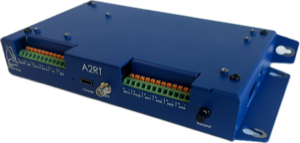
All-in-one remote telemetry unit with sensor management, local data recording, ALERT2 transmission, and integrated solar charging for simpler remote installations.
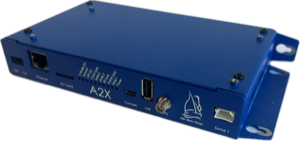
Power-efficient ALERT2 modem for repeater sites in rugged environments, including solar-powered installations where reliability and low draw matter.
Receives ALERT2 radio traffic and provides the network handoff to internet-connected systems and operational software.
A2RT handles sensors and local logging while a nearby A2X provides repeater functionality through a local connection.
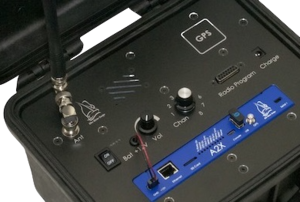
Portable ALERT2 transceiver for diagnostics, maintenance, antenna checks, site verification, and field troubleshooting.
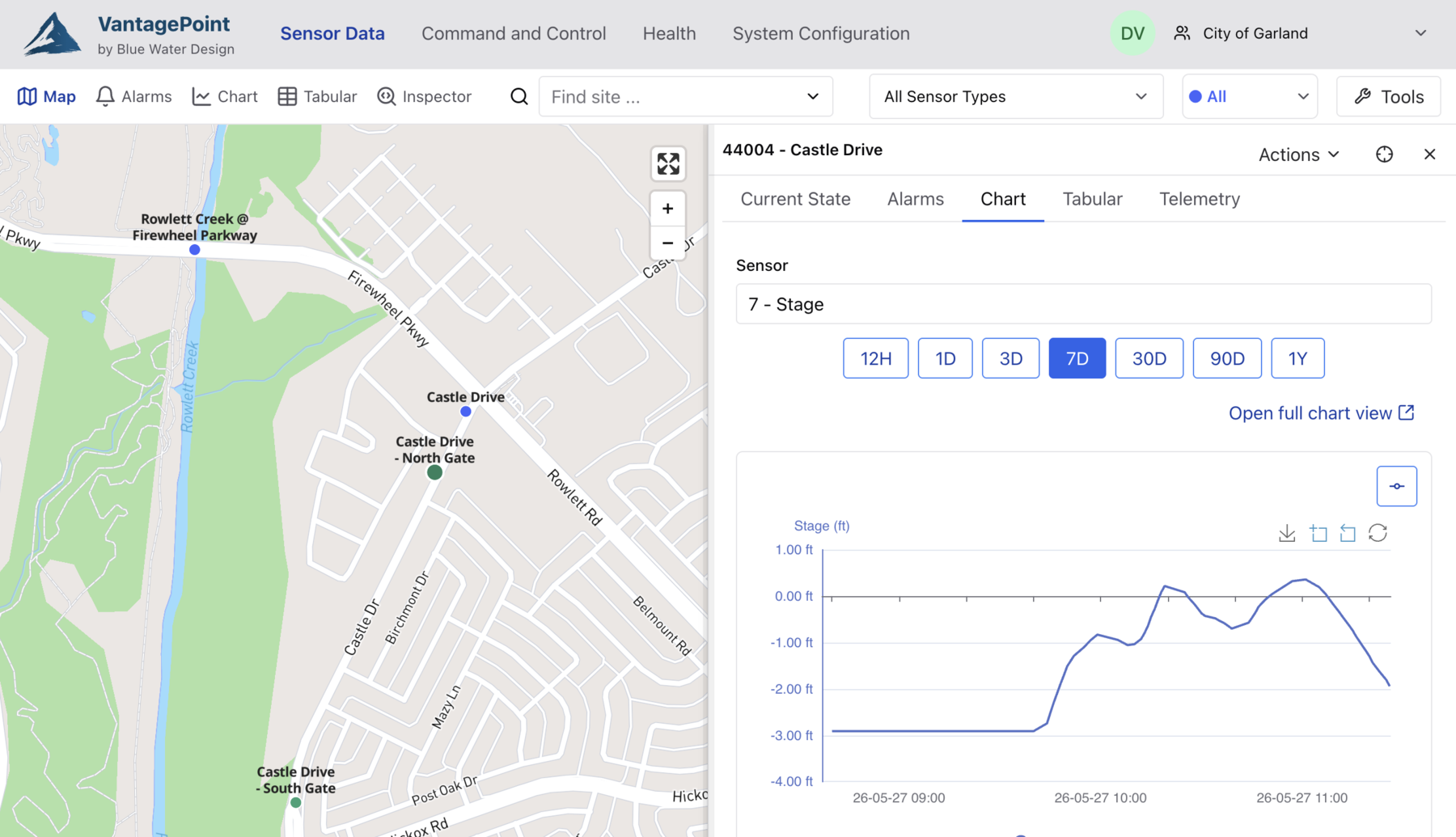
Cloud monitoring software for maps, charts, alarms, public dashboards, and system visibility after data leaves the ALERT2 network.
Protocol basics
ALERT2 is easier to understand as a message moving through three jobs: describe the measurement, wrap it with network information, and prepare it for radio transmission.
The application layer is flexible enough to represent a broad range of environmental data, but it includes efficient formats for common monitoring work: rainfall, stage height, weather observations, battery voltage, and status values. It can also carry water quality, fire weather, equipment state, and other domain-specific measurements when a system needs them.
The MANT layer wraps one application payload with network information such as source address, time, hop limits, path details, and routing context. That network information can also be useful after delivery, because it helps software and operators understand how a message moved through the system. ALERT2 also supports encryption at the MANT layer, allowing encrypted messages to move through the network alongside plain-text messages.
The AirLink layer defines how ALERT2 messages are transmitted over radio, including the TDMA timing structure, synchronization, encoding, and error detection and correction. ALERT2 data does not have to travel only by radio; once messages are decoded or generated by network equipment, they can also move through IP-based links and external systems.
The ALERT2 specifications also define an API interface for how devices on the ALERT2 network interact with external components. That interface is part of how field hardware, base stations, software, and downstream systems can fit together without treating ALERT2 as a closed data format.
Encodes the actual report: rainfall, stage, battery voltage, weather, status, or other environmental values.
Adds the information the network needs to handle the message, including source address, time, hop limits, and path details.
Turns the digital message into an audio stream for radio transmission, with synchronization, error detection, and error correction.
Learn more
Public ALERT2 documentation can be difficult to find. These references are useful starting points for understanding the protocol and planning a real network.
Start with the hardware lineup or the technical resource library. If you need help matching a device to an existing ALERT2 network, contact Blue Water Design.